Introduction
Industrial environments such as oil refineries, chemical plants, gas processing facilities, and grain storage systems often contain flammable gases, vapors, dust, or fibers. In these conditions, even a small electrical spark or high surface temperature can trigger an explosion. To minimize these risks, strict safety standards have been developed to regulate the design, manufacturing, and use of equipment in hazardous areas.
Two of the most important international certification systems are ATEX and IECEx. These certifications ensure that industrial equipment is designed and tested to operate safely in explosive atmospheres. Understanding the differences and requirements of these standards is essential for engineers, procurement specialists, and plant operators working in hazardous environments.
What Is ATEX Certification?
ATEX is a European regulatory framework that governs equipment used in explosive atmospheres. The term ATEX comes from the French phrase “Atmosphères Explosibles.” It refers to two key European Union directives designed to protect workers and facilities in hazardous areas.
The two main ATEX directives are:
– ATEX 2014/34/EU (Equipment Directive) – Covers equipment and protective systems intended for use in explosive atmospheres.
– ATEX 1999/92/EC (Workplace Directive) – Focuses on safety requirements for workplaces where explosive atmospheres may occur.
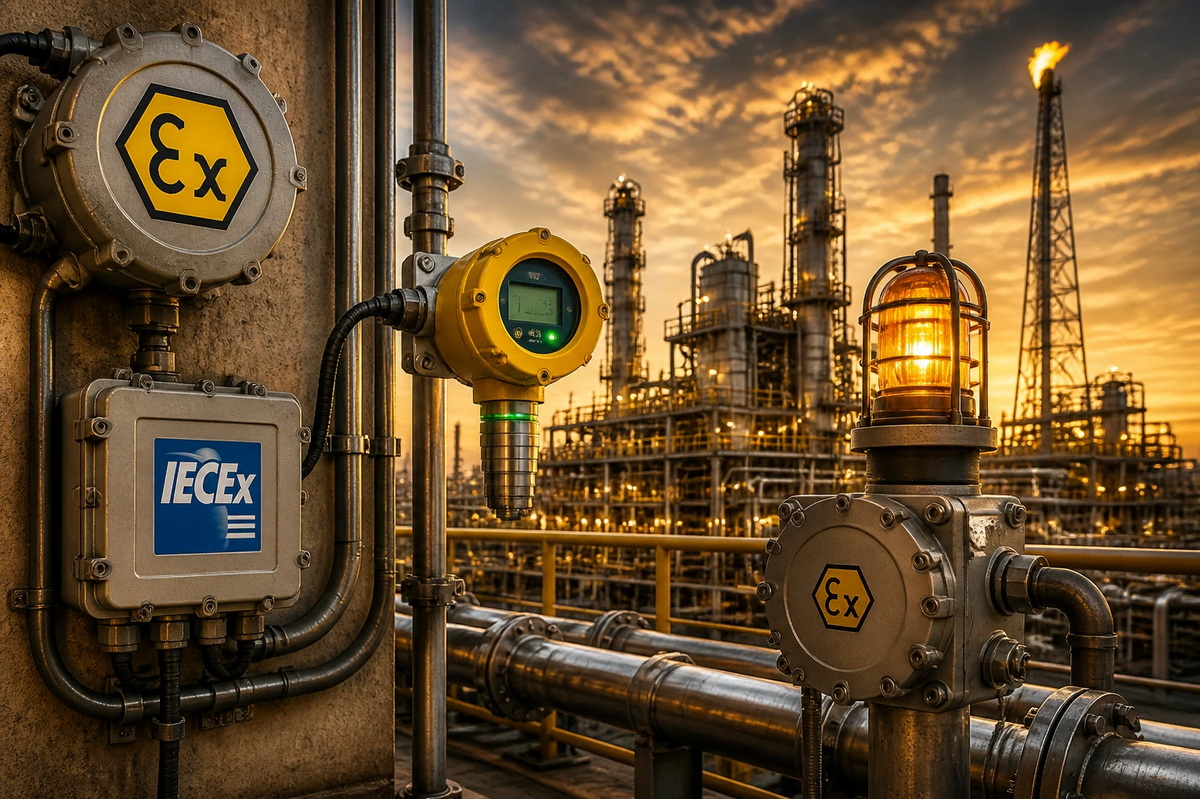
ATEX-certified equipment must undergo strict testing and evaluation to confirm that it will not ignite surrounding explosive mixtures during operation. Products that meet the requirements receive the CE marking along with the Ex symbol, indicating compliance with ATEX standards.
What Is IECEx Certification?
The IECEx system is an international certification scheme developed by the International Electrotechnical Commission (IEC). Unlike ATEX, which applies specifically within the European Union, IECEx is recognized globally and aims to harmonize standards for equipment used in hazardous areas.
IECEx certification ensures that products meet the requirements of the IEC 60079 series of standards, which define safety requirements for electrical equipment used in explosive atmospheres.
One of the key advantages of IECEx is that it simplifies global trade. Manufacturers can certify their products once under the IECEx scheme and use that certification to support approvals in multiple countries.
Key Differences Between ATEX and IECEx
Although both certifications focus on explosion protection, they differ in several important ways.
Geographical Scope
ATEX is mandatory within the European Union, while IECEx is recognized internationally and widely accepted in regions such as Asia-Pacific, the Middle East, and Australia.
Regulatory Structure
ATEX is a legal requirement under EU directives, meaning compliance is mandatory for equipment sold or used in EU hazardous environments. IECEx, on the other hand, is a voluntary certification system used to demonstrate compliance with international standards.
Certification Process
ATEX certification is typically performed by Notified Bodies approved by the European Union. IECEx certification is issued by Ex Certification Bodies (ExCBs) within the IECEx system.
Despite these differences, many manufacturers obtain both ATEX and IECEx certifications to ensure their equipment can be used worldwide.
Hazardous Area Classification
To understand ATEX and IECEx requirements, it is important to know how hazardous environments are classified. These classifications indicate how frequently explosive atmospheres may occur.
Gas Hazard Zones
– Zone 0: Explosive gas atmosphere is present continuously or for long periods.
– Zone 1: Explosive atmosphere is likely during normal operation.
– Zone 2: Explosive atmosphere is unlikely and occurs only for short periods.
Dust Hazard Zones
– Zone 20: Combustible dust is present continuously or frequently.
– Zone 21: Dust clouds may occur occasionally during normal operation.
– Zone 22: Dust clouds are unlikely and occur only briefly.
Equipment must be designed and certified according to the zone in which it will be installed.
Equipment Protection Levels (EPL)
Both ATEX and IECEx define Equipment Protection Levels (EPL) that indicate the degree of protection provided by equipment.
Examples include:
– Ga / Da: Very high protection for Zone 0 or Zone 20 environments
– Gb / Db: High protection for Zone 1 or Zone 21
– Gc / Dc: Normal protection for Zone 2 or Zone 22
These classifications help engineers choose equipment that meets the required safety level for a specific location.
Explosion Protection Techniques
Certified equipment uses specialized protection methods to prevent ignition. Some common techniques include:
– Flameproof Enclosure (Ex d): Contains explosions within the enclosure so they cannot ignite the surrounding atmosphere.
– Intrinsic Safety (Ex i): Limits electrical energy so sparks cannot ignite gases or dust.
– Increased Safety (Ex e): Enhances design to prevent arcs or sparks under normal operation.
– Pressurization (Ex p): Maintains protective gas pressure to prevent hazardous gases from entering equipment.
– Encapsulation (Ex m): Encases components in protective resin to prevent ignition.
Selecting the correct protection method depends on the application, environment, and equipment type.
Industries That Require ATEX and IECEx Equipment
Explosion‑protected equipment is widely used in industries where flammable materials are present. These include:
– Oil and gas production and processing
– Petrochemical plants
– Chemical manufacturing facilities
– Mining operations
– Pharmaceutical production
– Food and grain processing plants
– Paint and coating industries
In these sectors, using certified equipment is essential for protecting workers, infrastructure, and the environment.
Benefits of Using Certified Equipment
Using ATEX or IECEx certified equipment provides several advantages:
Improved workplace safety
Compliance with international safety regulations
Reduced risk of explosions and accidents
Greater reliability in hazardous conditions
Simplified approval processes in global projects
For companies operating in hazardous environments, certification is not only a regulatory requirement but also a critical component of risk management.
Conclusion
ATEX and IECEx certifications play a vital role in ensuring safety in hazardous industrial environments. By establishing strict design, testing, and certification requirements, these standards help prevent explosions and protect both personnel and equipment.
Understanding how these certification systems work allows engineers and decision‑makers to select the right instruments and equipment for dangerous environments. Whether operating within Europe or internationally, choosing properly certified equipment is a fundamental step toward safe and reliable industrial operations.